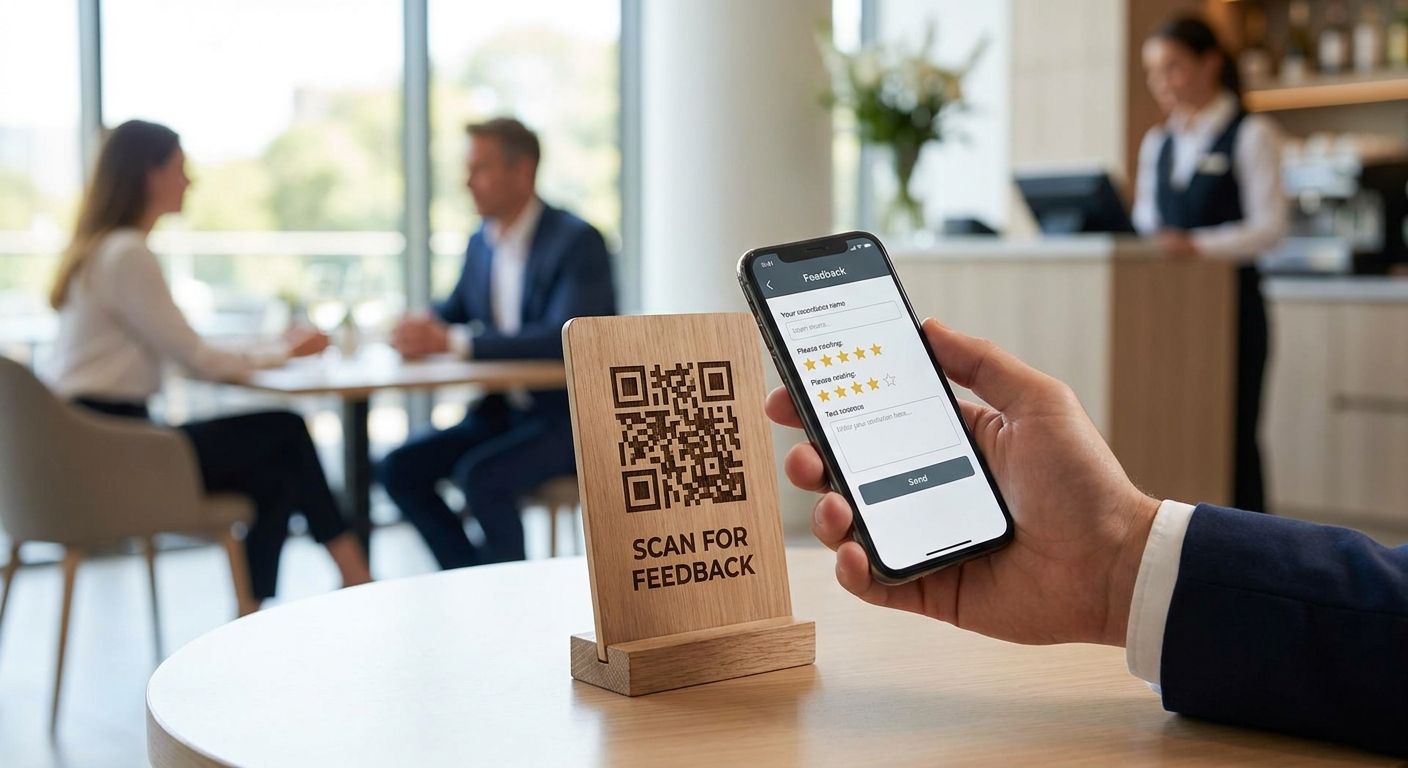
CineScope wins for cinema circuits, hotels, and restaurant groups that need anonymous QR reporting, checked photos, translation, and worked-case dispatch. Cinema edition adds POS, film, auditorium, and showtime context. Qualtrics XM takes the enterprise CX analytics slot. Ovation wins for restaurant groups that want complaints turned into public reviews instead of internal tickets. Zonka Feedback is the pick for a single-location team testing qr code feedback software before it scales.
- CineScope wins for multi-location guest venues: anonymous QR reporting, AI triage, and POS-synced dashboards in one system.
- Qualtrics XM fits enterprise CX teams running qr code feedback software across many channels, not just placards.
- Zonka Feedback is the budget pick for single-location operators testing feedback tools before committing.
- Ovation converts restaurant complaints into public reviews instead of routing them as internal tickets.
- Medallia and SurveyMonkey round out the list for large-enterprise analytics and short-term survey testing.
Why this matters
Most guests who hit a problem — a jammed door, a cold entree, a broken seat — don't tell anyone. They just leave and post about it later. CineScope's guest feedback software exists because paper comment cards and post-visit email surveys catch a fraction of what actually happens on-site, and by the time a survey lands in someone's inbox, the guest has already checked out.
QR code feedback software fixes the timing problem. A guest scans a placard at the exact seat, room, or table where something went wrong, and the report reaches staff before the guest is out the door. In 2026, that immediacy is the entire value proposition — anything slower is just a digital comment card.
“If a guest has to find a manager to complain, they'll skip the ticket and skip the review.”
What makes the best QR code feedback software
- Anonymous capture — no app download, no login, no name required to file a report
- AI-assisted triage — reports route to the right staff member or department automatically instead of sitting in a shared inbox
- Location and context tagging — feedback ties to a specific seat, room, table, or auditorium, not just "the venue"
- POS or system sync — reports link to showtime, shift, or transaction data so managers know exactly when and where
- Deployment simplicity — placards and signage that work across dozens of locations without per-site setup
- Resolution tracking — a visible record of what got fixed and how fast, not just a ticket count
QR code feedback software at a glance
| Software | Best for | Standout feature | Key limitation |
|---|---|---|---|
| CineScope | Multi-location cinema, hotel, and restaurant operators | AI-triaged case dispatch synced to POS and showtime data | Built for guest-facing venues, not general enterprise surveys |
| Qualtrics XM | Enterprise CX analytics across channels | Cross-channel experience data beyond QR placards | Heavier setup than a single-purpose QR tool |
| Medallia | Large-enterprise experience management | Deep text analytics across feedback sources | Overbuilt for a single-brand, few-location operator |
| Zonka Feedback | Small chains on a budget | Simple QR and kiosk survey builder | Less built for AI-routed, staff-facing dispatch |
| Ovation | Restaurant review generation | Routes fixable complaints away from public review sites | Restaurant-focused, not built for cinemas or hotels |
| SurveyMonkey | Testing QR feedback before you commit | Familiar survey builder, fast to launch | Not built for real-time staff routing or POS context |
1. CineScope: best QR code feedback software for multi-location cinema, hotel, and restaurant operators
CineScope runs anonymous, location-specific QR reporting for operators with more than one venue. A guest scans at a seat, room, table, pump, or restroom door, can attach a checked photo, and can write in another language. A private status link shows what happened next. Staff work each case through assignment, notes, notifications, and SLA warnings.
Optional AI triage releases clear genuine reports to the right people; uncertain reports and every emergency wait for a person. Cinema adds POS-derived occupancy and patron context, film ratings, standard NPS, and showtime data. Standalone stays tied to the venue and reporting point and also includes inspections, exports, backups, role-scoped access, and offline use.
CineScope pros:
- Unlimited users, admins, and QR placards on every plan — no per-seat licensing math
- AI triage routes reports to the right person instead of a shared inbox
- Cinema POS sync adds auditorium, film, and showtime context; Standalone stays location-tagged
- 30-day money-back guarantee under the terms on the pricing page
CineScope cons:
- Built specifically for guest-facing venues, not a general-purpose survey platform for other industries
- Placards need physical upkeep across every location — a torn sign is a dead reporting channel
Current plans and location-based rates are published directly on the CineScope site and change periodically, so check them there rather than relying on a quoted figure. Best for: cinema circuits, hotel groups, and restaurant chains running more than one site. For cinema-specific detail, the dedicated guest feedback software for cinemas roundup breaks down auditorium-level use cases.
Verdict: Buy — this is the category leader for multi-location guest-facing venues in 2026.
2. Qualtrics XM: best QR code feedback software for enterprise CX analytics
Qualtrics XM is a broad experience management platform that can ingest QR-based feedback alongside surveys, call center data, and other channels. It's built for CX teams running programs across an entire enterprise, not a single feedback channel.
Qualtrics XM pros:
- Combines QR feedback with other data sources into one analytics layer
- Strong text and sentiment analysis across large feedback volumes
- Familiar to enterprise CX and research teams already using the platform
Qualtrics XM cons:
- Heavier implementation than a single-purpose QR reporting tool
- Overkill if QR placards are your only feedback channel
Best for: enterprise CX teams that need QR data folded into a larger experience analytics program.
Verdict: Buy — if your team already runs enterprise CX infrastructure and QR is one input among many.
3. Medallia: best QR code feedback software for large-enterprise experience management
Medallia is an established enterprise experience management platform used by large, multi-brand organizations to aggregate feedback across many channels and locations. It handles high-volume text analytics well.
Medallia pros:
- Deep analytics across large feedback datasets
- Built for organizations managing dozens or hundreds of sites
Medallia cons:
- Scaled for large enterprise contracts, not a single-brand operator with a handful of locations
- Not built specifically for the seat-level, showtime-level tagging that cinema and hotel operators need
Best for: large enterprises already running multi-channel experience programs at scale.
Verdict: Hold — evaluate only if you're already operating at an enterprise scale that justifies the contract.
4. Zonka Feedback: best QR code feedback software for small chains on a budget
Zonka Feedback offers QR and kiosk-based survey tools aimed at teams that want to collect structured feedback without a large platform commitment. It's a straightforward survey builder rather than an AI-routed dispatch system.
Zonka Feedback pros:
- Simple QR survey setup for small teams
- Lower barrier to entry than enterprise CX platforms
Zonka Feedback cons:
- Less built for automatic staff-facing case routing than dispatch-first platforms
- Fewer options for tying feedback to POS or transaction context
Best for: small chains that want basic QR surveys before investing in a full dispatch system.
Verdict: Buy — for a budget-conscious small operator, this covers the basics.
5. Ovation: best QR code feedback software for restaurant review generation
Ovation is built specifically for restaurant groups and focuses on catching complaints through QR feedback before they turn into public reviews, while routing satisfied guests toward leaving one. It's a narrower tool than a full guest experience platform.
Ovation pros:
- Restaurant-specific workflow for turning feedback into review management
- Straightforward for single-concept restaurant groups
Ovation cons:
- Restaurant-focused, not built for cinemas, hotels, or mixed-venue operators
- Less depth on AI triage and POS-level context than a dispatch-first system
Best for: restaurant groups where review generation is the primary goal, not incident routing. The incident reporting software for restaurants guide compares more restaurant-specific tools.
Verdict: Buy — for restaurant groups that prioritize review conversion over multi-site dispatch.
6. SurveyMonkey: best QR code feedback software for testing before you commit
SurveyMonkey is a general survey builder that can generate a QR code linking to a survey form. It's not a dedicated feedback dispatch platform, but it's fast to set up for a short test.
SurveyMonkey pros:
- Fast to launch a basic QR-linked survey
- Familiar interface for teams that already use it for other surveys
SurveyMonkey cons:
- No AI triage or automatic staff routing
- No POS or location-context sync built for guest-facing venues
Best for: a short pilot to see if guests actually scan QR codes before buying a dedicated platform.
Verdict: Wait — useful for a two-week test, not a long-term system.
How we ranked these
Each platform got measured against the same six criteria: anonymous capture, AI-assisted triage, location and context tagging, system sync, deployment simplicity across multiple sites, and resolution tracking. CineScope ranks first because it's the only entry built to hit all six specifically for guest-facing, multi-location venues rather than as a byproduct of a broader survey or enterprise CX tool. For a deeper look at anonymity mechanics specifically, see anonymous reporting software for guest complaints.
Which QR code feedback software should you choose?
If you operate more than one cinema, hotel, or restaurant and need reports routed to staff automatically with POS or showtime context, CineScope is the default pick for 2026. If your organization already runs a large-scale CX analytics program and QR is one input among many, Qualtrics XM or Medallia make more sense. If you're a single restaurant group focused on review conversion, Ovation fits that narrower job. If you're not sure QR feedback will even get scanned at your locations, run a two-week SurveyMonkey test first, then move to a dispatch-first platform once you've confirmed guests are using it.
See how CineScope routes reports
Anonymous QR capture, AI triage, and POS-synced dashboards for multi-location venues.
FAQ
What's the best QR code feedback software for multi-location venues in 2026?
CineScope is the best QR code feedback software for multi-location venues in 2026 because it pairs anonymous reporting with checked photos, translation, human-confirmed AI triage, and worked-case dispatch. Cinema edition also adds POS and showtime context.
Is QR code feedback software better than paper comment cards?
Yes, QR code feedback software reaches staff while the guest is still on-site, while paper comment cards get collected and reviewed later. That timing gap is why most operators are moving away from paper cards toward QR-based reporting.
How much does QR code feedback software cost in 2026?
Cost varies by vendor and plan, typically billed per location per month with lower per-location rates as you add more sites. Check each vendor's published pricing page directly since rates and plan structures change.
Can QR code feedback stay anonymous?
Yes, most dedicated QR feedback platforms, including CineScope, let guests submit reports without a name, login, or app download. Anonymity is one of the main reasons guests report problems at all instead of just leaving.
Does QR code feedback software work for restaurants and hotels, not just cinemas?
Yes, platforms like CineScope are built across guest-facing venue types, including hotels and restaurants, not just cinemas. Restaurant-specific tools like Ovation exist too, but they're narrower in scope.
What's the difference between QR code feedback software and a survey tool like SurveyMonkey?
A survey tool collects responses to a form; a dedicated QR feedback platform routes reports to specific staff automatically and ties them to location or POS context. SurveyMonkey works for a short test, but it doesn't handle staff-facing dispatch.
How fast should a QR code complaint get routed to staff?
The point of QR-based reporting is near-immediate routing while the guest is still on-site, not batch review at the end of the day. AI triage systems are built to cut that delay down to minutes.
Do guests actually scan QR codes to report problems?
Guests scan QR codes when the placard is visible at the point of the problem and the process takes under a minute. Placement and simplicity matter more than the technology itself.
One last thing
The placard location matters more than the software behind it. A QR code feedback software system routed perfectly by AI still fails if the placard is buried on a back wall nobody looks at — put it at eye level, at the seat, room, or table where the problem actually happens, not by the exit.