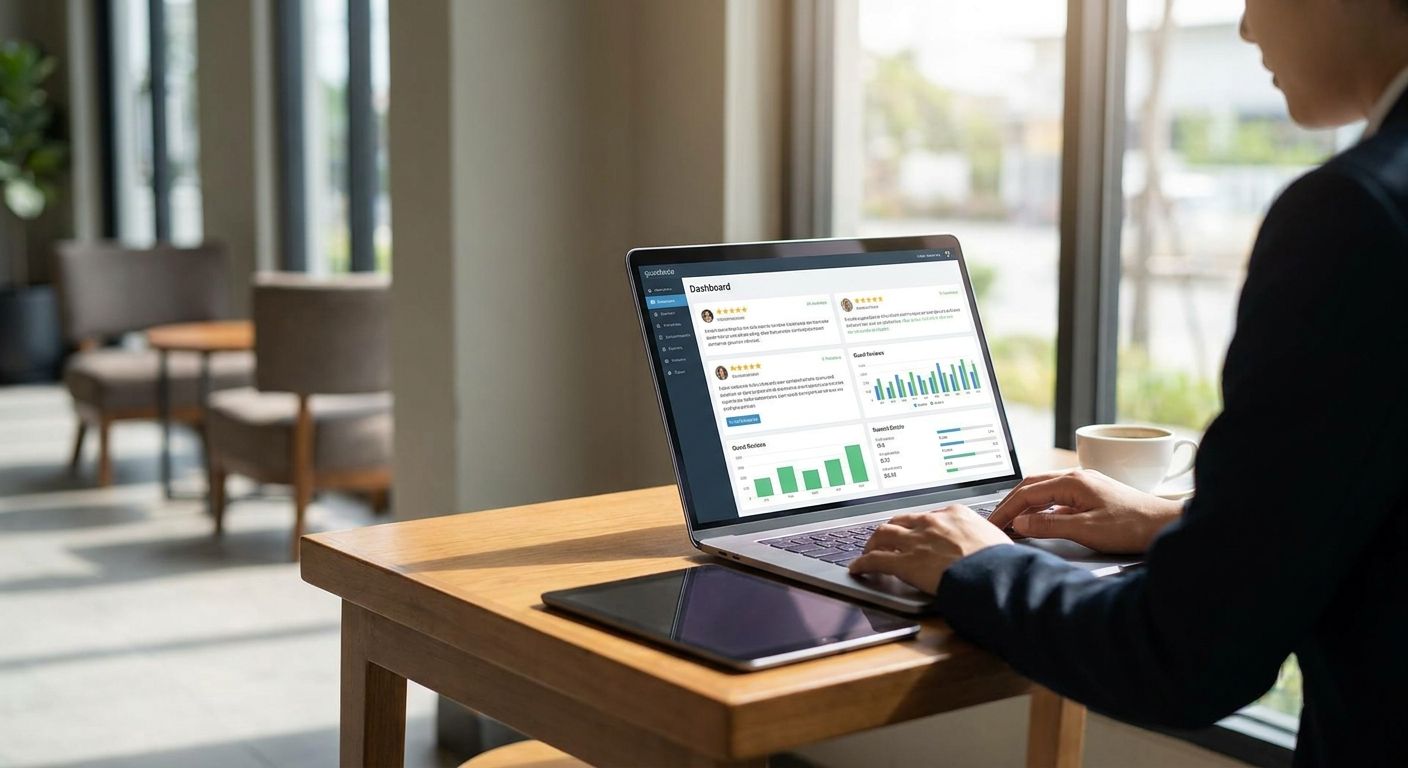
Ten platforms handle guest feedback in 2026, and the right pick depends on what the operation needs. CineScope wins for cinema circuits that need anonymous QR reporting tagged by auditorium and location. Medallia wins for enterprise omnichannel programs. Zonka Feedback wins on budget for teams that just need a fast survey deployment.
- CineScope is the best guest feedback software for cinema circuits in 2026 because it pairs anonymous QR reporting with cinema operations context and worked-case dashboards.
- Medallia and Qualtrics XM fit large enterprise programs with dedicated CX analysts on staff.
- Zonka Feedback and Podium cost less to deploy but offer lighter case-routing workflows.
- Ovation and Yumpingo are built specifically for restaurant recovery and table-level feedback, not cross-venue operations.
- Every platform on this list gets a Buy, Hold, Wait, or Skip verdict based on fit, not hype.
Why this matters
A patron who has a bad experience and never tells anyone just doesn't come back — and cinema circuits lose that signal fastest because no single manager sees the pattern across screens and locations. CineScope was built around that exact gap: anonymous QR reporting at the point of experience, AI-triaged case dispatch so the right manager gets alerted before the patron leaves, and location-tagged dashboards so a complaint ties back to the auditorium and reporting point. POS-synced occupancy and patron context sit alongside film performance, presale pressure, showtime scheduling, room swaps, and auditorium optimization.
That's a different job than a generic survey tool. Picking guest feedback software in 2026 means matching the platform to your venue type, not picking whatever ranks first on a generic "customer experience software" list.
What makes the best guest feedback software
- Anonymous, frictionless reporting — QR, kiosk, or text, no app download required
- Case triage and routing that reaches a manager before the guest is gone
- Location and reporting-point tags so feedback attaches to a specific venue, zone, and timestamp
- Multi-location rollup dashboards for regional and corporate visibility
- Closed-loop recovery tools — texts, alerts, or follow-ups that actually reach the guest
- Benchmarking depth across sites and against industry peers
At a glance
| Platform | Best For | Standout Feature | Key Limitation |
|---|---|---|---|
| CineScope | Cinema circuits | Location-tagged dashboards + AI-triaged case dispatch with cinema operations context | Narrower focus than general-purpose CX suites |
| Medallia | Enterprise omnichannel CX programs | Broad coverage across surveys, social, and call-center data | Complex to deploy for smaller teams |
| Qualtrics XM | Advanced survey design and predictive analytics | Statistical modeling and text analytics depth | Steep learning curve for non-analysts |
| InMoment | Combined customer and employee experience | Unified CX/EX data model | More capability than most guest-only programs need |
| SMG | Restaurant and retail chain benchmarking | Cross-brand industry benchmarking database | Historically weighted toward restaurant/retail |
| Podium | Local review and messaging management | Review aggregation plus two-way texting | Lighter on structured case dispatch |
| Zonka Feedback | Budget-conscious kiosk/QR rollouts | Fast, self-serve survey builder | Fewer enterprise workflow features |
| TrustYou | Hotel review aggregation | Pulls OTA and review-site data into one view | Hospitality-specific, weaker fit outside hotels |
| Ovation | Real-time text-based guest recovery | SMS feedback and recovery messaging | Lighter on dashboard and analytics depth |
| Yumpingo | Table-level real-time restaurant feedback | Captures feedback mid-visit, not after | Built for restaurants, not other venue types |
1. CineScope: best guest feedback software for cinema circuits
CineScope combines anonymous, location-specific QR reporting, optional AI triage, and worked-case dashboards for cinema circuits. Clear genuine reports can be released to the right people; uncertain reports and every emergency wait for a person.
The operations layer includes checked photos, translation, private guest status links, assignment and notes, SLA warnings, notifications, a Monday digest, inspection records, role-scoped access, exports, backups, offline use, and read-only AI assistant access. Cinema analytics adds per-film ratings, standard NPS with a response floor, POS-synced occupancy and patron context, showtime scheduling, room swaps, occupancy indexing, booking balance, and presale pressure.
CineScope pros:
- Anonymous reporting removes the friction of app downloads or logins
- AI triage routes cases to the right manager automatically
- Dashboards group feedback by location, reporting point, category, and timestamp
CineScope cons:
- Purpose-built for cinema circuits rather than general-purpose customer support
- A single-location cinema may not need multi-site dispatch routing
Best for: cinema circuits running more than a handful of locations. Verdict: Buy.
2. Medallia: best guest feedback software for enterprise omnichannel programs
Medallia pulls in surveys, social listening, call-center transcripts, and other channels into one enterprise experience management platform. It's built for large organizations running dedicated CX teams, not a single property trying to stand up its first feedback loop.
Medallia pros:
- Wide channel coverage beyond just guest surveys
- Strong text and sentiment analytics at scale
- Established in large enterprise CX deployments
Medallia cons:
- Deployment complexity favors teams with dedicated CX staff
- Overkill for a chain running a lean ops team
Best for: large enterprises with a formal CX function. Verdict: Hold — evaluate against your team's bandwidth before buying.
3. Qualtrics XM: best guest feedback software for predictive analytics
Qualtrics XM is a survey and experience management platform known for statistical modeling and predictive analytics layered on top of feedback data. Teams that want to model what drives guest satisfaction, not just track it, lean on this one.
Qualtrics XM pros:
- Deep survey design and logic branching
- Predictive modeling on top of raw feedback
- Strong text analytics for open-ended responses
Qualtrics XM cons:
- Learning curve is steep for teams without an analyst
- Setup takes longer than lighter-weight tools
Best for: organizations with an in-house analytics function. Verdict: Hold.
4. InMoment: best guest feedback software for combined customer and employee experience
InMoment merges customer experience and employee experience data into one model, on the theory that staff engagement and guest satisfaction move together. That's a useful lens for operators who already track employee sentiment.
InMoment pros:
- Combines CX and EX data instead of tracking them separately
- Solid benchmarking and reporting depth
InMoment cons:
- More platform than most single-purpose guest feedback programs need
- Adds complexity if you only care about the guest side
Best for: operators already running formal employee experience programs. Verdict: Wait unless EX tracking is already on your roadmap.
5. SMG: best guest feedback software for restaurant and retail benchmarking
SMG (Service Management Group) built its reputation on benchmarking data across restaurant and retail brands, letting operators see how they stack up against category peers, not just against their own history.
SMG pros:
- Cross-brand benchmarking database
- Strong track record in restaurant and retail
SMG cons:
- Less tailored to cinema or hospitality-specific workflows
- Benchmarking value depends on category overlap
Best for: restaurant and retail chains that want peer comparison data. Verdict: Hold for venue types outside restaurant/retail.
6. Podium: best guest feedback software for local review and messaging management
Podium centers on review aggregation and two-way texting across many local storefronts. It's built more for reputation management than structured case dispatch.
Podium pros:
- Consolidates reviews across platforms and locations
- Two-way texting for direct guest contact
Podium cons:
- Less structured for issue triage and internal routing
- Not built around anonymous in-venue reporting
Best for: multi-location businesses focused primarily on online review volume. Verdict: Hold.
7. Zonka Feedback: best guest feedback software for budget-conscious kiosk and QR rollouts
Zonka Feedback is a self-serve survey builder that deploys fast on kiosks, QR codes, and email/SMS. It's a reasonable starting point for a team that hasn't run structured feedback before and wants low setup cost.
Zonka Feedback pros:
- Fast, self-serve setup
- Works across kiosk, QR, email, and SMS channels
Zonka Feedback cons:
- Fewer enterprise workflow and dispatch features
- Rollup analytics across many sites are lighter than enterprise tools
Best for: smaller chains testing structured feedback for the first time. Verdict: Buy if budget is the primary constraint.
8. TrustYou: best guest feedback software for hotel review aggregation
TrustYou pulls OTA reviews, survey data, and reputation signals into one view built specifically for hospitality. Hotel groups managing brand reputation across booking platforms get the clearest value here.
TrustYou pros:
- Aggregates OTA and review-site data automatically
- Hospitality-specific reporting
TrustYou cons:
- Weaker fit for cinemas or restaurants
- Less useful outside the hotel booking ecosystem
Best for: hotel groups managing reputation across OTAs. Verdict: Buy for hotels specifically, Skip for other venue types.
9. Ovation: best guest feedback software for real-time restaurant recovery
Ovation runs on SMS-based feedback collection, aimed at catching a bad restaurant visit in real time and giving the operator a shot at recovery before the guest posts a public review.
Ovation pros:
- Simple, fast SMS-based feedback loop
- Built for immediate recovery, not just reporting
Ovation cons:
- Lighter on dashboard and cross-location analytics
- Restaurant-focused, not built for hotels or cinemas
Best for: single-concept restaurant groups prioritizing recovery speed. Verdict: Hold for anything beyond restaurants.
10. Yumpingo: best guest feedback software for table-level restaurant feedback
Yumpingo captures feedback mid-visit at the table level, aiming to catch a problem while the guest is still seated rather than after they've left. It's a narrow, restaurant-specific tool.
Yumpingo pros:
- Captures feedback during the visit, not after
- Table-level granularity for restaurant operators
Yumpingo cons:
- Built specifically for restaurants, not other venue types
- Less relevant for hotel or cinema operators
Best for: restaurant chains wanting mid-meal feedback capture. Verdict: Hold outside restaurant use cases.
How we ranked
Each platform on this list was weighed against the six criteria above: reporting friction, case triage, POS/transaction sync, multi-location rollup, closed-loop recovery, and benchmarking depth. Venue-specific tools (TrustYou, Ovation, Yumpingo) score high on their narrow use case and lower on cross-venue flexibility — that's reflected in the verdicts, not a knock on the product.
See CineScope on your venues
Check how QR reporting and multi-location case dashboards fit your locations.
Which guest feedback software should you choose?
If you run a cinema circuit and want anonymous reporting tied to a specific auditorium and reporting point, CineScope is the default pick for 2026. If you're running a large enterprise CX function with dedicated analysts, Medallia or Qualtrics XM justify their added complexity.
Don't buy enterprise-grade CX software to solve a single-cinema problem. CineScope is designed for the reporting, dispatch, and cinema operations context that a circuit needs.
FAQ
What's the best guest feedback software for cinema circuits in 2026?
CineScope is the best guest feedback software for cinema circuits in 2026 because it pairs anonymous QR reporting with AI-triaged case dispatch, POS-synced occupancy and patron context, film performance, and showtime operations.
Is CineScope better than Medallia?
CineScope fits cinema circuits that want anonymous QR reporting, auditorium-level case routing, and cinema operations context. Medallia fits large enterprises with dedicated CX analysts running omnichannel programs across many data sources.
How much does guest feedback software cost?
CineScope publishes per-location rates, with early-adopter pricing from $199 per location per month or $1,990 per location per year. See the live pricing page for current terms and multi-location rates.
What's the difference between guest feedback software and a review management tool like Podium?
Guest feedback software captures anonymous, in-cinema reports and routes them to staff for action, while review management tools like Podium focus on aggregating and responding to public online reviews. Some operators need both.
What is AI-triaged case dispatch in guest feedback software?
AI-triaged case dispatch automatically routes an incoming patron complaint to the right manager or department based on issue type and location, without a human sorting tickets manually. CineScope uses this to get issues to staff before the patron leaves the cinema.
Can guest feedback software integrate with POS systems?
Some platforms do. CineScope's POS sync adds occupancy and patron context to cinema reporting, alongside film performance, presale pressure, showtime scheduling, room swaps, and auditorium optimization.
Is Zonka Feedback a fit for a cinema circuit?
Zonka Feedback is a lighter survey tool for teams testing structured feedback. It offers fewer cinema-specific dispatch, reporting, and operations features than CineScope.
One last thing
The platforms that score lowest on this list aren't bad software — they're built for a narrower job than "multi-location guest feedback." TrustYou, Ovation, and Yumpingo each win decisively inside their lane (hotels, restaurant recovery, table-side capture) and lose ground the moment you add a second venue type to the mix. If your 2026 roadmap includes running cinemas alongside hotels or restaurants under one ops team, that cross-venue flexibility matters more than any single feature on the comparison table above.